How is it structured?
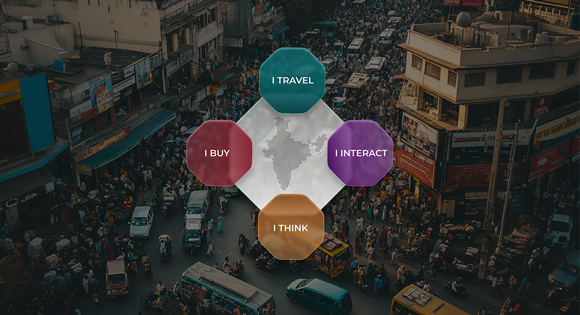
Each segment is decoded across four layers — Technology, Mindset, Consumption, and Mobility.
From static personas to behavioral systems.
The Indian Consumer Segmentation framework (ICS) reframes Indian mobility by decoding how aspiration, behavior, and context, not just income shape what people choose to drive.
Segmentation starts not with what people earn but how they think, aspire, and decide.
User behavior, market shifts, and systemic realities converge to define opportunity.
What people drive is not a decision in isolation it's the result of how they live, consume, and evolve.

India is often understood through numbers, income brackets, sales trends, market reports. But mobility in India operates on a different layer. A car is not just transport; it's aspiration, identity, and a reflection of progress.
ICS was built to decode this layer.
Through a combination of large-scale research and behavioral mapping, we studied how users interact with technology, what drives their decisions, how they consume, and how these patterns translate into mobility choices. The segmentation evolved from traditional economic groupings into a multi-dimensional system—mapping income, generation, aspiration, and behaviour together.
The result is not a static segmentation, but a living framework continuously evolving with shifts in technology, society, and user mindset. It enables teams to move beyond who the user is to understand why the user chooses.
Segmentation is not about classification it is about revealing intent. In a market like India, where aspiration often outpaces income, behavior becomes a stronger indicator than demographics.
ICS is built on the belief that meaningful strategy emerges by connecting how people think, what they value, and the systems they operate within. Not to label users but to understand the forces shaping their choices.
Each segment is decoded across four layers — Technology, Mindset, Consumption, and Mobility.
From static personas to behavioral systems.

A spectrum of consumer archetypes each named, mapped, and decoded.
Payment behaviour, purchasing domains, and decision drivers turn user insight into product strategy.

Static personas freeze users in time. ICS doesn't.
The framework evolves with shifts in technology, aspiration, and context built to stay relevant as India changes.

The lens behind the framework.
Eight layers of motivation,from basic needs to transcendence, revealing why Indian consumers often buy upward, long before lower needs are fully met.
Tell us about your project. We'll tell you how INITIA can make it better.